Vangelis And The Journey To Ithaka
In September 2008 Vangelis was interviewed by Tony Palmer in Athens. The filmed interviews were used as the backbone of the documentary "Vangelis And The Journey To Ithaka", which was published on DVD in November 2013. The following is a complete transcript of that DVD.
 1. ‘The Language Of Music’. Alexander. Jessye Norman and Oliver Stone
Jessye Norman: My first impression of meeting Vangelis was that it was unusual and just alltogether marvellous to find a grown man so full of life! He has the enthusiasm and the excuberance of a person who is just beginning life, rather than a person who has already had so much experience and so many wonderful happenings already, and that is the thing that still impresses me about this person. There is a love of life, and a love of being on this planet that is just inspiring.
Vangelis: Why do we need music? Why everybody, you know, speak the language of music? The globe, I mean, forget the universe, just the earth. Why? I mean, you don’t speak Chinese, you don’t speak maybe another language. You don’t speak Greek, maybe, but you speak music. Why we do that? Why we know? Why we whistle? Why we do la la la la la… even when we’re two or three years old? Why I start to do music four years old? Who taught me this? Because it is implanted in us, in everybody. So that’s why when people say ‘I know nothing about music’, they mean that I’ve never been to school, I’ve never learnt notes, which I never did myself, and I still don’t. But, you can’t say that you don’t know about music, because music made you. Music is the strongest thing. It is as strong as oxygen. And it speaks directly to your soul. Directly.
 Oliver Stone: I first became aware of Vangelis I think with “Chariots Of Fire”, which is really a knock-out score and it had a lot to do with that movie’s success. It was a wonderfully uplifting, spiritual, because it was a spiritual movie, the man was running for... God. Vangelis gets the heaven and the hell. I think music reflects the heart, the soul, there’s a poetry, there something between the lines, it’s not spoken, it’s felt, and it does wash the emotions and cleans it. It can be cathartic too, inspiring, Vangelis hits all those notes for me. It’s great to have somebody work like that, it is just love. What do you want from a composer in a movie is the love that an actor or screenwriter, or a DP.. anyone. If you bring love to the movie it shows, it feels. Vangelis is a deeply quiet man, he is like a monk, think of a man who lives in his mind, who lives in his head. He is in the material world to some degree, but he is definitely off into the interior world, as if he hears the music of the spheres sort of speak. I think my mother listens to Alexander, his album, over and over again. I do to. I find it very inspiring, it is wonderful, it evokes, it brings out nobility in the person who listens, and I love that in music.
Vangelis: Music is not our property, it’s a way to express things, and it’s a code. And it’s what makes the universe move, shapes the universe. So, I don’t think we can do better. I mean, we, as a matter of speech, we can say, ah, yeah, I have an idea, or just, I imagine that, or I have an inspiration, but all that’s our words. I think that the word more accurate is to be available. And when you’re available, like a radar, then, the message comes. And then you have it.
 2. Classical Opinions. Akiko Ebi and Julian Rachlin
Akiko Ebi: The first time I met Vangelis was at a Martha Argerich concert. I think it was around March 1990 at the Théàtre des Champs-Elysées, next to the hotel Plaza Athénée. From the viewpoint of classical musicians, his popular music appears very simple. It appears to exude simplicity. I am a classical pianist, but listening to his symphonic music, and talking with Martha Argerich, I think in fact it expresses something deeper, something almost cosmic, in spite of its being ‘simple’ or ‘popular’. His music is very cosmic, and what I feel is wonderful is that it shines a tremendous light upon the listener, that you could call optimism or hope.
 Julian Rachlin: I was invited to the birthday party of Sean Connery in Athens. I was the surprise guest, because I did know Sean before but he did not know that I was coming to play. After dinner people were sitting next to the fireplace having coffees or whatever drinks, and I was behind this curtain with my mom on the piano, and we were just waiting for the curtain to open, I was playing. And Vangelis was amongst the people, amongst the invited guests. And that’s ofcourse how afterwards we immediately started talking, he said ‘oh, you must come to my studio!’. He called me, like he sometimes just calls ‘Hi Julian’. And we have this joke, with Vangelis, he always talks to me, and I speak to him with a Scottish accent: imitating Sean Connery! I can’t do it very well... But anyway, he always goes ‘Hi Julian, this is Vangelis’. And I am standing in the rain somewhere, I think in London or Paris, something like this, he says ‘I want to play you something’. And okay, fine, so I am just on the streets ,and he starts playing on his synthesizers, and he starts playing this violin concerto, the first movement of the violin concerto. And I was standing outside ‘cause he didn’t stop playing, was like for 15 minutes, and then he finished and ‘Did you like it?’ I said: ‘Did you record it? Did you record it, because this was incredible!’ ‘Oh, I think yeah’. So it was recorded, and then I came to Athens, and we started putting it together, basically I started playing the violin part, etc. There is so much wonderful music which nobody knows about, wonderful classical music from Vangelis, and the only thing I can always do is try to inspire him to one day release it. But the thing is, because he can not read or write music, that he needs to find a person who will write it down the way that he hears it.
 3. Mythodea. The music industry & success. Jon Anderson
Vangelis: You know, Greeks, my ancestors, they had a very, very mathematical mind, and through that way of thinking and feeling they find out that they knew much, that music is the first thing in the world, what shapes and makes move the world. All that maybe sounds a little bit crazy, but today, but they’re not, and you see more and more and more, even scientists they really learn the universe through music, because music is the code. We are surrounded and covered by music, we’re made by music; now, what we do with music is, it’s the mirror of our present state. Music can be therapeutic and it can be really a deadly weapon.
To go through this music industry and to be, how to be successful, you have to be successful; you have to sell records, you have to, because this is the only thing, I mean, they… this is what they’re looking for, they’re looking ... sales. And they’re looking to have people to be able to sell, and to be successful, and to become stars, whatever stars are. And that was a very difficult thing for me, all my life.
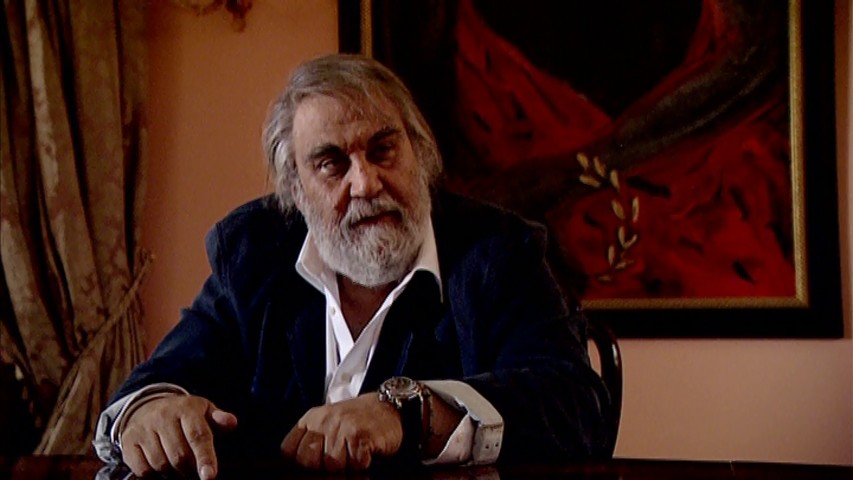
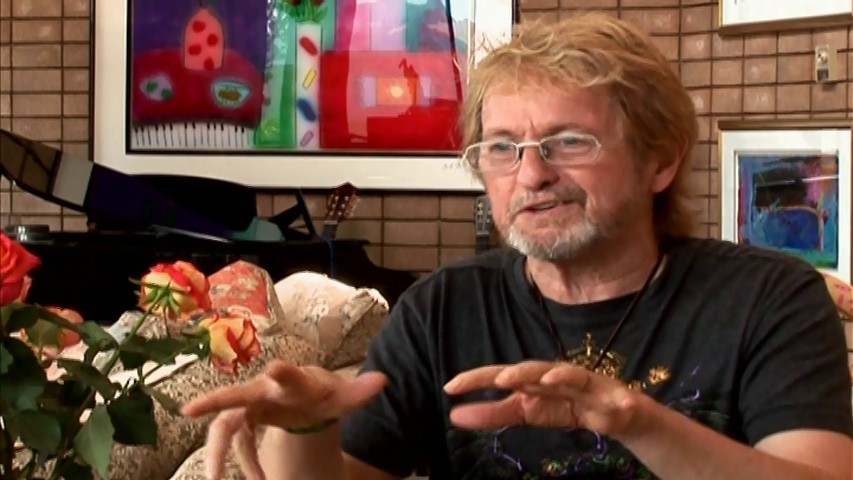 Jon Anderson: So, I got a phone call from Vangelis, it was a rainy Tuesday afternoon I remember. Vangelis said: ‘Jonny, you’ve got to come over to the studio, we got to write a hit record’ I said: ‘What?!’ ‘Yeah we got to write something that the radio will like’. So I said OK, I come over. He says: ‘I think I have something going’. So I went in and it was ... this thing he had going on the keyboard, and I said ‘well start the tape’, and he started the tape, and I started singing ‘You ask me where to begin... am I so lost in my sin’. And I just sang it, as if I had written it the day before. We finished it at about 5 ‘o clock, and long behold, within two hours we had written it, finished it, and done! And the following Friday we were on Top Of The Pops! Vangelis, didn’t know what it was... two weeks later, and it was a hit! Everywhere in the world.
Vangelis: When you have the misfortune to be successful, then it works both ways, and for me it is very, very difficult. I can’t, due to the success, because the success is not the most important thing for me, to become a prisoner to the success and being obliged to produce the same thing all the time. And that’s why I’m turning my back to things like that. I have to move to something and then I’ve done it, but I don’t want to be obliged to do it. We’ve been number one, record after record.
Through the years I had to do certain things in order to get somewhere and to have the facilities to do some more, because when you grow up as a concert pianist, or a singer, or, you know, a rock and roll guitarist or something like that, you don’t need much, but if you go through the, you know, the direction and the way that I’m doing things today, you need a lot of technology, you need your own studio, you need a lot of things. So, in order to obtain and do all that, I had to go through this music industry, which was not the best thing for me, and I had to play the game.
 4. Music for commercials. Hugh Hudson
(Vangelis’ music has been used in at least 2000 commercials, so many in fact that he has lost count...)
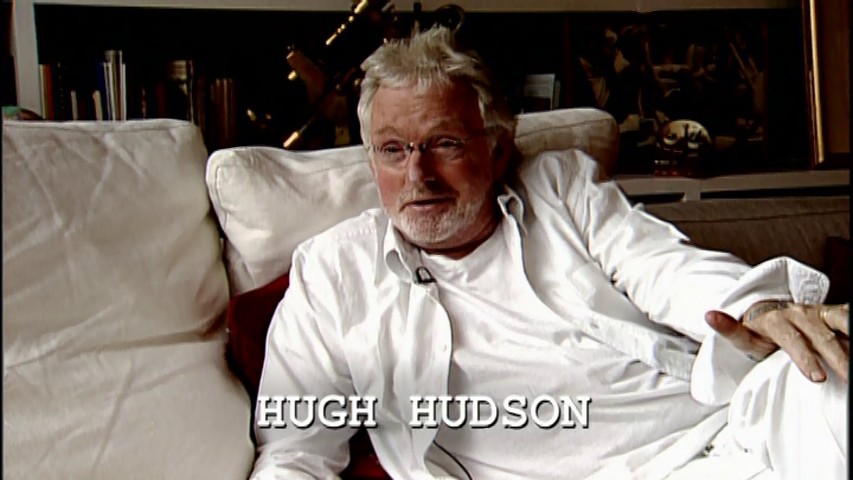
Hugh Hudson: I met Vangelis through his girlfriend, who was the same size as Vangelis. She was wonderful though, she was enormous, sensual, a French woman called Fanny. And she was fantastic, Fanny, because she also was a friend of a girlfriend of mine, the family of a girlfriend I used to have in the sixties. So through Fanny I was introduced to Vangelis, and then through Vangelis I met Rossif, Frédéric Rossif, and I then started to work for Rossif, on making commercials and documentaries, and I used Vangelis, early commercials, you know for a number of French commercials, and he did them. Immediately you could see this is a man you have to work with, because, instinctive reaction to image, show him image, immediately he goes straight to the keyboard, and goes... And it fits, always used to fit all the time, he had this uncanny ability to understand the flow of pictures put together.
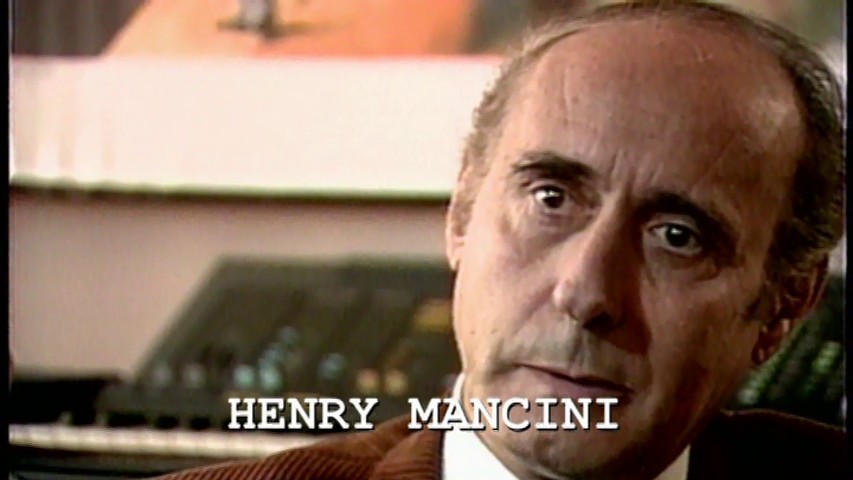 5. Electronic sounds; the studio. Transcription. Henry Mancini and Irina Valentinova
Henry Mancini: I was surprised to learn he is not a schooled musician. He writes nothing down, but within that one wave of sound the components of that could be 10, 15 different things going on to make that particular sound, and which means there are that many variables, there are also that many chances to mess it up. I guess if he were back in the 1700s or 1800s he would do it the way everybody did it then.
Vangelis: I still believe that, that the electronic sounds are equally natural. The only thing that changes is the source. And somehow even they go further than the acoustic instruments because you can produce sounds closer to the sounds of the universe. I mean, human beings express themselves through the acoustic instruments that we know today. But these instruments, they have limitations as well. They don’t have limitations of the expression of feeling, but they have limitations of sound. And I guess that is why we produce the symphony orchestra, because it’s like the first synthesizer. It’s something that we…, we put together the different areas of sound together and then we create colours, and situations between those different families of sound. And then you have the symphony orchestra, otherwise, why have a symphony orchestra? It was a need to have that, in order to enrich, enlarge the spectrum. But with the electronic instruments you go even further than that. And why not? Why they’re not natural? I mean, the whole universe is electricity. It’s, what’s the name?... it’s waves.
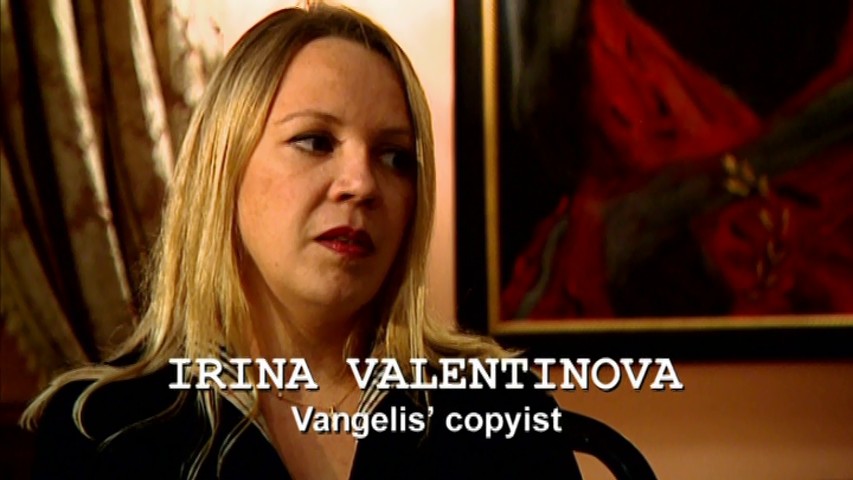 Irina Valentinova: I know Vangelis for 10 years now, I transcribe the music that he writes, from the audio cassettes that he has recorded. I write it down as musical notes, ‘transcribed notation’ so to speak. For me it is very interesting, because it is the first time that I have met a musician who writes music, orchestrates it and plays it - and all of these things at the same time. He always thinks in terms of musical instruments and how to use them, using all the pedal boards and little levers at any given moment. I listen to all this and sit down with the manuscript paper, the ‘pendagramma’ as it is called in Greek, and transcribe all the notes so that other musicians can play his compositions.
Vangelis: You can go through the let’s say conventional or traditional sounds and then you can extend to other things, which actually, you know, the conventional instruments can’t produce. So you have really a spectrum which is infinite…. This, this situation is ready for everything you wish, for everything that music wishes, and I’m able, or capable, I will deliver, if not, tough luck.
 6. Music for films. 1492 - The Conquest Of Paradise. Ridley Scott and Gérard Depardieu
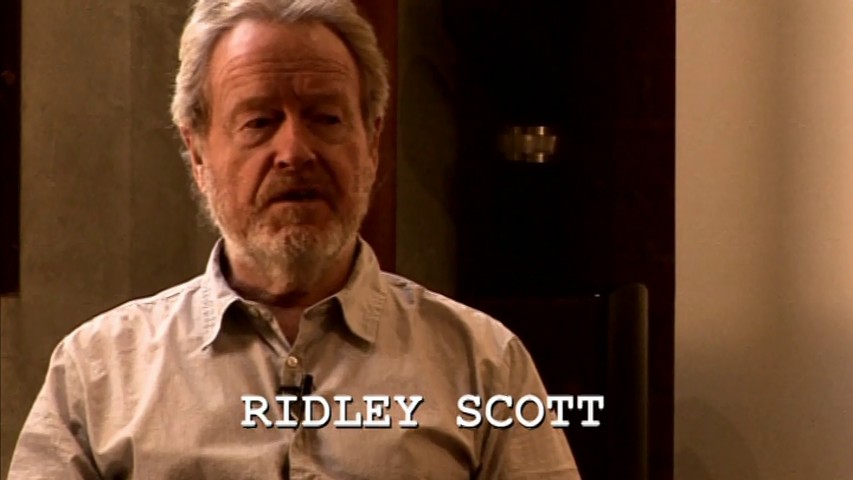
Ridley Scott: “I was aware of him through Hugh Hudson. Hugh had been in RSA which was my company then, for almost seven years. And then Hugh had gone off, and had done “Chariots Of Fire”. Vangelis had moved to a glass studio in Paris somewhere, his studio was entirely in glass, in a courtyard, and he had taken over the courtyard, put his glass studio there, and that’s where he did 1492. He’s always has got this twinkle, he likes the ladies (I think, I should not say this really as...) So there are some nice looking ladies kicking around, and uhm, being in the world of this, kind of it is not exactly rock and roll, but there are a lot of musicians and rock and roll types around him”.
“You do me a rough, sit over here it’s gonna go this...pfoom. You go wham, you get this whole thing, I think ‘Jesus, I get it!’ Where is, a guy on the piano going here, we’re gonna have timpani, boom! And you’re going ‘huh?’, and here is the horns ‘OK’, you play on the goddamned piano... Sorry, I’m not that much of a genius, so...’
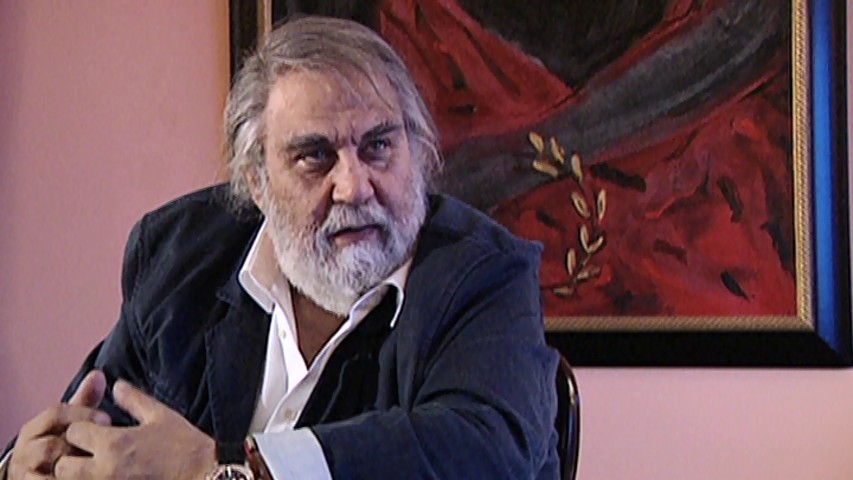 Vangelis: Well, I think I got to the point by memory, because I always, always said, the few times that I spoke out, but, you know, memory is a very important thing, and we learn more by memory than by learning if we go to school, because we learn… we think that we learn, but only we remember what we know already.
This music, it’s the ethnic music of Greece. They come in some extraordinary reaches in different areas of Greece. Incredible music, it’s very ancient, much older than the current bouzouki music, epidemical; maybe I give an example from my country, but in every country it’s exactly the same thing. And we should treasure that. Instead of copying, you know, the current fashion. That’s a very, very important thing, you see, you think that you learn that, I mean, yes, we can learn some details, but the important things we know. The only things is that, we don’t remember those things, because the system doesn’t allow us to remember anything of those kind of things. If you remember, you’re going to find out that you know more than you think you know.
7. World Games 1997. Bitter Moon; El Greco. Roman Polanski
 And I’m very, very, very concerned about, not only about my country, but about every country, to preserve the roots and this ethnic richness. What is ours? Ours is something that lasts for, forever, I mean, forever, but you know, the ever in this case, when the moment is now, the ever is the past.
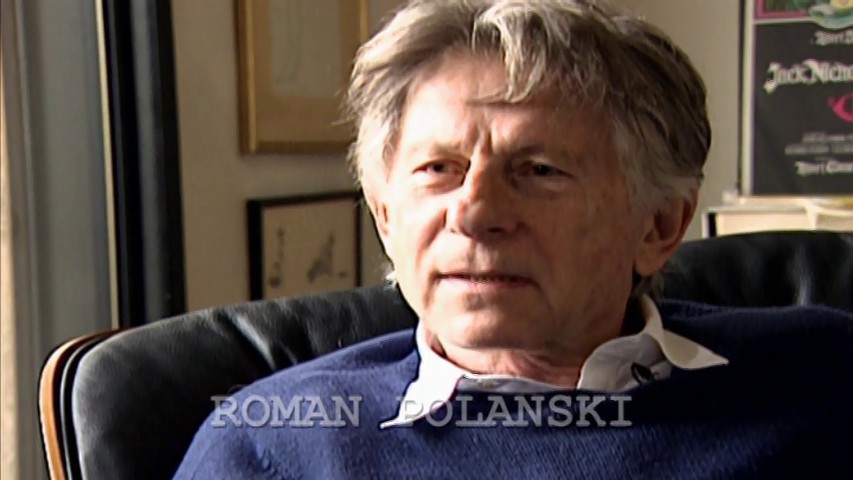
Roman Polanski: First of all he is tremendously generous, with his friends, with everybody, and on all levels, particularly on the artistic level you see, he shares his joy in writing and playing music with the others you know He never let himself being asked twice to play something and to sit behind his instrument and give the friends some joy, you know. But also as a human being he is a rare guy really, you know, very quickly you get attached to him. I met Vangelis in Rome when I was planning “Bitter Moon” the movie, and Emmanuelle Seigner, my wife, was doing a film in Rome as well, and they were staying in the same hotel. And I don’t know if you hear all the racket that all his entourage was making and she told me ‘I met Vangelis, and he absolutely wants to meet you’. He loves the movies, he does not try to promote himself through the music he writes for a particular film, he tries to illustrate the film and expresses the feelings that the film does to him. With all this he is extremely humble, you know, there is no streak of megalomania in him, you know, he just is a real artist, that’s what we understand by an artist, that is someone who loves his craft, and he expresses what he feels.
8. ‘Painting is personal’. Vangelis - Pintura. Consuelo Císcar Casaban and Connie Perez Olarte
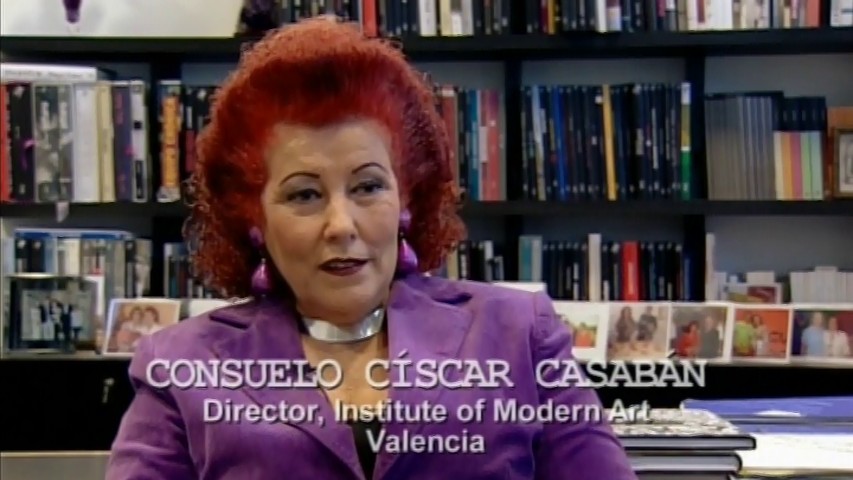 Consuelo Císcar Casaban: I met Vangelis through Irene Papas almost 12 years ago. I went to his house and I saw some paintings in his house. I said to him ‘Is this work yours?’ And he said: ‘Yes’. I said: ‘Are you a painter?’ And he said: ‘I paint’. ‘How long have you been painting?’ I asked. ‘Since I was seven years old’.
He did not want to exhibit his paintings. He used to say that his painting was his soul, his life, and that it was always with him. He did not want his pictures to leave his house because they were like his children. And he did not want to abandon his children for any time in any city in the world. Then I said to him: ‘Valencia is different, your children will be perfectly safe there, in a magnificent space’. I sent him the plans of a space called El Almudin, which is an old granary in the city, converted and restored into a cultural space.
Connie Perez Olarte: She came to Greece many times, many times. This was very hard for her. She used all the people that she knew that knew him and she tried to press. She is a woman, very, with this character, very typical Spanish. Puts like all her soul into what she wants to do, and she, when she saw this, she was crazy about it, and she said, ‘Vangelis, I mean, I don’t know what I prefer you, I know you from your... from before, but I think this, the world, is entitled to see. You have not to keep it inside’. So he said ‘No, no, no’. And this thing was three years, she was after him. And, suddenly, she caught him in a moment that he didn’t understand what he said, and when he realises, the paintings are on their way to Valencia.
Vangelis: Music is not personal, if you, if you approach it the way that I mentioned before it’s not personal, but painting is personal, very personal. So I didn’t want to impose anything, it’s a pleasure. I could have made it, you know, a commercial thing, a job, something. But I didn’t, and I think it was very good that I didn’t, until maybe a few years ago, that rightly or wrongly, I decided to give the permission for an exhibition, that’s all.
Consuelo Císcar Casaban: His work was then appreciated by museum directors from other countries around the world who had come to the exhibition and we made an itinerary which lasted four years! We had the work for four years, the children of Vangelis, four years around the world, as if they were now making a career outside Athens.
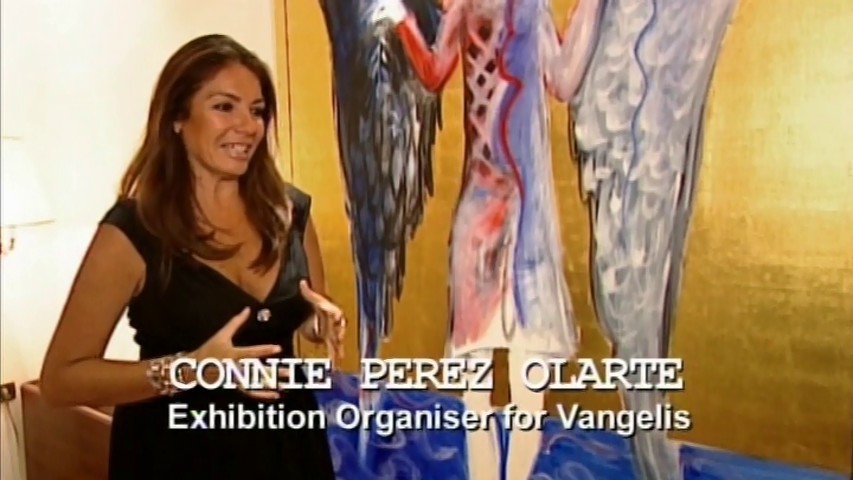 Connie Perez Olarte: We were in Uruguay, we were in Argentina, we were in Brazil, we were in Dominican Republic, in Cuba, and in Mexico. While we were in a country, and the other museums they were learning that this was there, they were calling ‘Can we have it?’.
Consuelo Ciscar Casaban: But each time we requested permission to take his work to another country he said ‘This is now the last time’. But there was always another, and another, and another, until finally in Athens I said to him ’now look, please don’t say to me again the last. The last will be when we finish the tour’. Eventually, we signed an agreement to end the tour and the children returned home.
Connie Perez Olarte: People was coming to touch me. People was coming to ask me for autographs. And then one day I said, ‘No, why should I give you an autograph, I’m not Vangelis’. So, what I ask, one guy comes one day, and said ‘Can I touch you?’ I said, ‘Why you are asking to touch me?’ So he said ‘Because you are the closest person to him that we ever will see.’
From Brasilia they were coming to Salvador. I mean, it was incredible. The same thing in Argentina. I saw people coming from Patagonia, from Ushuaia, especially to the Natural Museum in Buenos Aires to see his exhibition. And, you know, all the museums, they were national museums, because, Vangelis, he doesn’t sell, he doesn’t want to sell, even though I have tried, and Consuelo also, this is one thing, that her and me, we couldn’t push him into it. In Valencia I had a lot of requests.
Interviewer: But he won’t sell?
Connie Perez Olarte: Oh, he won’t even talk about it. So one day I said ‘Vangelis, please, all this, you know, I don’t want to exhibit?’. So he said, ‘Connie, because this is a part of me. I feel like I’m putting myself naked in the middle of the Central Square’.
Consuelo Ciscar Casaban: I think Vangelis’ work is important for his country and for other countries, because he is like the artists of the Renaissance. Eclectic, but also very disciplined. And above all, very powerful.
Vangelis: I was about 15, 16 years of age, and every year the school would organize art exhibitions, paintings, and, of course, it was obvious to exhibit a few of my paintings at the time. And, I remember that year something extraordinary happened. I went to the room, to this place that everybody exhibits, so, all the, you know, the school, you know, people who exhibit their own things, and mine as well. And mine disappeared. Somebody stole them, my paintings. I never found one who, but I was devastated, and I couldn’t believe that someone is able to do such a thing.
 9. Ithaka - Constantin Cavafi. Sean Connery and Micheline Roquebrune Connery
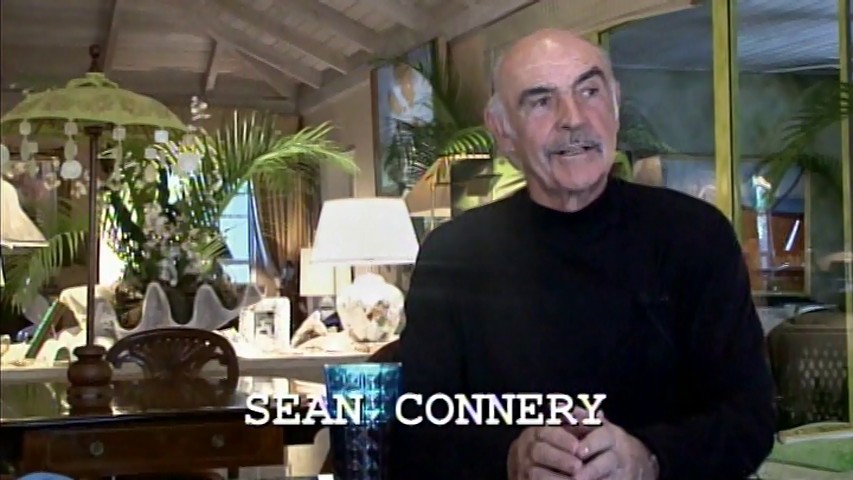
Sean Connery: I can never remember dates, but it was with Donald Sutherland, and we went to the apartment where Vangelis was, where he lived at that time, and by the end of the evening, it was so impressive to me, and he played some stuff on that, the organ, and he is the only one.... I think it was an organ. I don’t like the organ, but I liked him playing it. I don’t like that kind of church music, it’s too much squeezing about it, I mean, I mean it’s decks and decks of.. he is like the mad professor.
Micheline Roquebrune Connery: Yes, you know, I think he’s a very generous person, very genuine and generous. And I said, I went to see his paintings, and he had an easel, absolutely marvellous, I said ‘Oh my God, where did you find that easel? I’m looking for an easel like that’, ‘I’m sending one to you’. And then one day Sean said to me: “There’s a monster of a thing arrived for you from Vangelis’.
Sean Connery: I didn’t know that you had asked about the easel, I thought that you just remarked on it. And the next thing was that, no no, you didn’t say, ‘Oh, where did you get it?’ and that kind of thing. I thought you just said, ‘What a wonderful...’. I saw the easel at the time, and it dwarfed me.
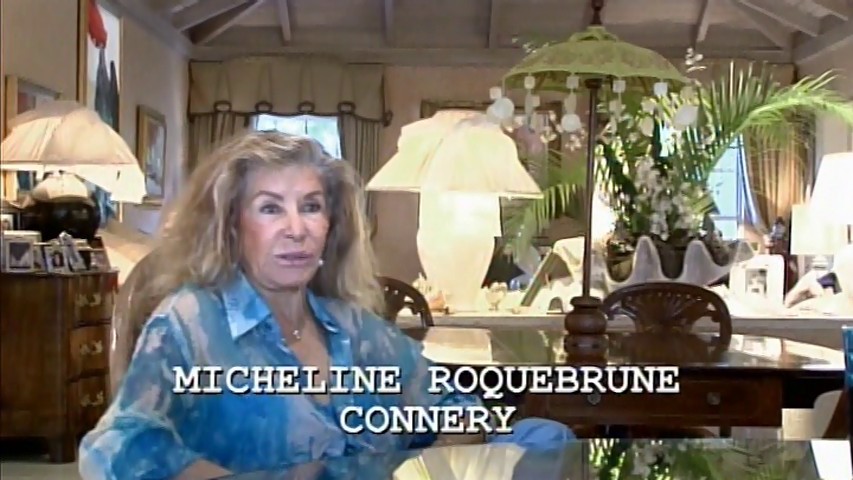 Micheline Roquebrune Connery: My painting book was edited in Greece, and we were thinking that it would be very nice to accompany the book and to sell the book with a CD on a poem of Cavafy called Ithaka.
Sean Connery: I’d, honestly, never heard of Cavafy before. I must say when I first read it I thought, it’s a bit like a short story, it’s not, it doesn’t seem to be a poem, but when I started to work on it, read it and understand what it was really about, then it was okay, so I, we have a studio 5, 10 minutes from here, and, so, I went on there and I said I’m gonna do two recordings. I’ll do one slower and one quicker, the normal. And he said, ‘okay’, so I recorded it twice, and he’d immediately come back and say: ‘I like it slower’. And I said: ‘Because you’re gonna get all your music in’...
Interviewer: And all the money went to...
Micheline Roquebrune Connery: “All of it, totally…”
Sean Connery: ... “All of it became part of this abandoned kids, that they started this trust, the wife Onassis, who published all the books and everything. And we went and sold them, and it was so moving, marvellous kids, beautiful, and very happy in a nice ambience. So, then he set it up, and we sold them for the trust, and they sold hundreds.”
 10. Slava's Snow Show. Slava Polunine
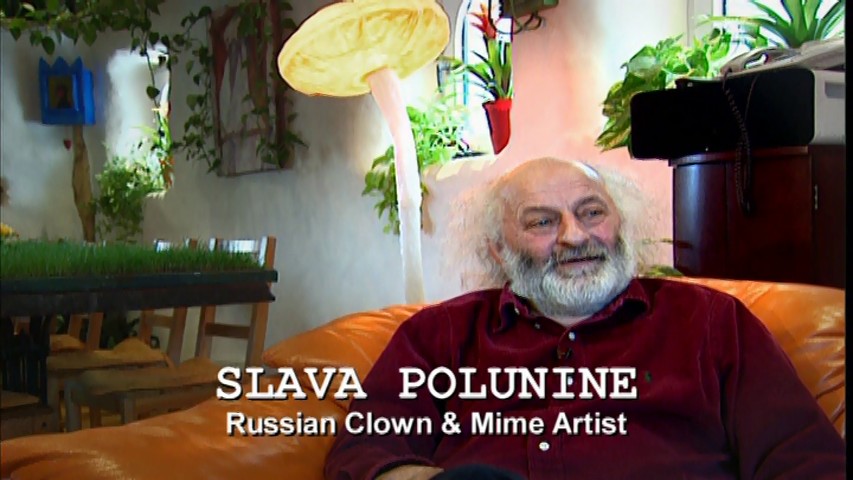
Slava Polunine: One day one of my friends brought me a recording. He said ‘This is definitely your style, you will like it.’ We sat there, too mesmerised even to move, listening to it. And I understood that this music was my music. It ‘sounded’ inside me. I understood that it had to be with me always, at all times. I knew then I would need to use it in my work. It’s a kind of music that blends itself completely, in space, nature, your life. You do not listen to it as if it were just some little song, but is is as if you were breathing this music. It is in the rhythm of your breath, the rhythm of all your senses, the rhythm of your whole being. The rhythm of where you are at the moment. The impression is such as if you are this music. This music can not be expressed with words. It’s all in the silence, the gestures, in the movements as much as in the notes. This music floats in the air and creates surreal worlds that one can not touch. The intellect is of little use here. It is all the emotions that one can grasp. After all, that is the very reason theatre exists.
11. Mythodea - Music for the NASA Mission. Peter Gelb, Jessye Norman, Kathleen Battle and Scott Bolton
Vangelis: Somehow, I started very early to ask questions. Why this, why that, about the universe, about where the music comes from, quite scientific for my age, about matter, anti-matter, about, you know, the galaxies, about a lot of things, and my mind couldn’t stop, you know, working like this, thinking like that.
 Peter Gelb: “When I was the president of Sony Classical I was very eager to work with composers who were interested in connecting with the public, and I felt that the classical musical field in general had suffered at that time and had been suffering for decades under the yoke of the establishment of critics and academics who felt that any composition that had the slightest hint of popular success was artistically invalid. I had a commercial motivation, I was working for a record company that was supposed to make money, of course most record companies were all losing money, and they were losing money back then, and they’re losing even more money now! At the time I was particularly interested in trying to identify composers who really had not lost the spirit of what composition was all about, which was a bond between the public and their creativity. So Vangelis was someone who fascinated me. I had a series of meetings with him in Athens, he seemed to have a limitless supply of classical compositions which he would pull out of drawers and closets and boxes, basically it seemed that he composed a symphony every night! So I had no idea that he was this prolific! He would play me these excerpts of pieces, or sometimes entire pieces, and these listening sessions would go on till late in the night. And so much of what he wrote was amazing, you know, because of course he wrote in real-time! He would sit down in his spaceship-like recording studio and just start making the music that he would explain to me was.. would come to him from ‘special sources’. I am being careful with my words as I don’t want to mischaracterise what he said to me, but he clearly felt that he was a vessel of some greater creative force or being that was communicating I think to the world through him. And I certainly was not going to disagree with him about that, for all I know maybe it is true.
It involved a huge amount of time and effort to create this event, which we staged not in a publicly available venue but actually in the temple of Zeus in the centre of Athens which had never been used for any kind of a large scale public event. And I now know more about the bureaucracy and of the antiquities in Greece that I would ever need to know or want to know. I actually had to go and meet with the minister of Culture, and the deputy ministers of Culture and the people in charge of archeological treasures there. Apparently in Athens, not just in Athens, but all over Greece, you can’t even build a home in Greece, because everything literally is ruins, you know, underneath the surface a few inches down in any street or backyard in Greece there is some antiquity waiting to be damaged if a builder were to plunge a shovel the wrong way.
And I helped in bringing Kathleen Battle and Jessye Norman to him, who are two artists who I had worked with over the years. And they were kind of an interesting pair to bring in to this project, because they themselves had been considered by the public to be professional rivals.
Jessye Norman: I consider the music of Vangelis as simply a gift. I don’t like designations as popular music, or classical music. What is that supposed to mean? In the 18th century, when Haydn or Mozart were sort of writing what they were writing, that was simply what one would have had to have called the popular music of the day, because that is was what there was. And I think that having these designations that we put on to music much later after their compositions, I think we make a big mistake. And when one listens to Mythodea or other wonderful compositions of Vangelis, to call it one or the other, I think it’s simply wrong. It’s music, and it’s music that’s come from the place that sort of makes sure that the sun rises in the East and sets in the West.
Kathleen Battle: This man, Vangelis, composed at the system he’s sits at. I thought he was playing something that he already had composed, and he just memorised it and he was just rehashing it, or maybe even revising it on the spot. No, no, no, no. He was composing in the moment. Can you imagine how difficult that is? What kind of a mind has to remember where you started? I can’t even remember where I left the keys. But to remember, in a piece of music, at the outset and then to come back to that same theme ten minutes later, ten minutes later, and close the piece, having developed it in all wondrous ways in between.
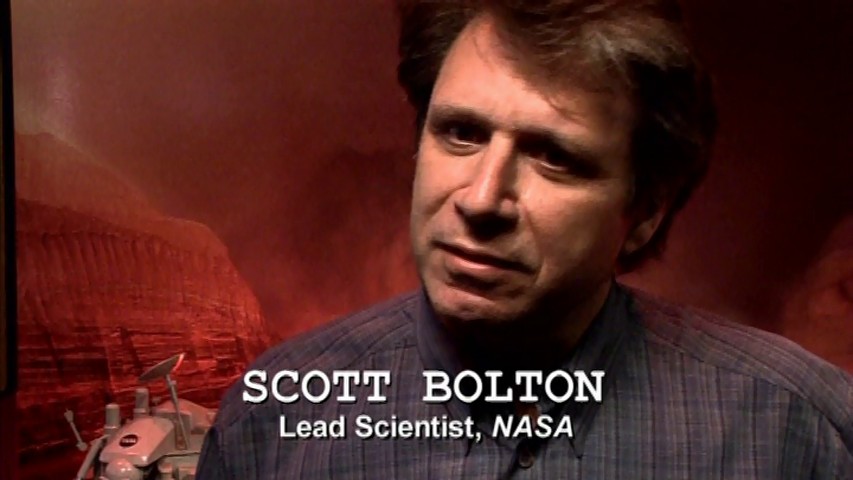 Scott Bolton: When I first met Vangelis he was very interested in NASA and space science, and exploration, and what it really meant. I mean, not just going to the moon. Of course, that’s intriguing to us all, but also, just the idea of learning about ourselves. And we started to look at a lot of the NASA research and compare it back to how the ancient Greeks thought and how did they derive certain things, and often we would centre it on fundamental questions of, you know, where did we all come from? What is the real origin of the universe? What is the origin of Earth? What was the big bang like? How did physics, you know, often when we go to explore the universe, cosmologists have mapped out various kinds of equations and ideas that actually use math and music; and the idea of harmony and harmonics is exactly how we describe the universe itself.
And he would introduce me to a lot of different kinds of experts, people that knew ancient Greek, people that studied music. And we started to put together almost a team of people with different expertise, and aliken it to the way the ancient Greeks actually did it. Advances were made by people coming together from different disciplines. The idea of a philosopher, a mathematician, a scientist, an artist and a musician, all meeting and discussing important topics, really allows you to make connections that otherwise are very difficult to make inside your own field. And, in fact, this was really the idea of the university, you know, was to bring this kind of academic environment together, where you had different disciplines. So we started to help each other on different projects. He helped me on some of mine, I helped him on some of his, and eventually that led to Mythodea.
With NASA, I had been working on a mission called Galileo, which was a spacecraft that was orbiting Jupiter and eventually dropped a probe into the atmosphere of Jupiter to measure its composition. And NASA, because they’re a government agency, they can not advertise, and they can’t market themselves, but they can educate and they can reach out and do things that help the public understand. And that’s what this really was about, was helping the public realise the excitement of the space program, and how it might connect to music, so NASA was pushing things on their website, Vangelis was looking at things that he could do, and eventually the collaboration was such a success that NASA even recognised Vangelis with a NASA medal.
Peter Gelb: Vangelis has a huge fan base amongst the astronomy community. They adore him. They even named some asteroid after him. I remember Vangelis explaining to me that various astronomers had felt that there was some real connection between what these extra-terrestrial sounds that were being picked up, because, of course, sounds are always being picked up in outer space and there was some relation to what they were hearing outer space and some of the music of Vangelis.
Scott Bolton: Vangelis is like a child and a genius all mixed together. His interest in the world and the universe and nature is unbounded, I mean, he is constantly thinking about stuff. But at the same time he is like a child in the sense of, you know, being amused at almost everything. In many ways, you know, the idea of space science, the fundamental questions, we all had as children, the fact that we don’t know the answer of where we came from or how we got here. And he’s still thinking all the time, constantly.
12. Blade Runner. Ridley Scott and Michael Deeley
Ridley Scott: We left to think that we work two... with him, a couple of days, a week. And I used to go back there at night, on the way home, I just pop around the back into the studio, usually have something like, they sold some curry, or Chinese food lying all over the place, and some beers, in those days I’d be smoking cigars, and beer, the whole thing was fantastic, loved all that! It’s all cleaned up ain’t it, what a pity, alright! And uhm, we’re also bloody politically correct and so healthy, and uhm he said, he was always, it was like being in the cave of a magician, and he would say: Look at this. And he would play it, to it, he’d play it, muck about and pull knobs and push theme knobs, I don’t know what the hell he was doing, but one way or another it was truly magical.
I’d be there until 2 AM. sometimes, I think 3 AM. one occasion, lying there, smoking, you know, drinking, and watching him just muck about. Said, oh okay, well I want you just see this, I got an idea, he said: Watch. Boom, screen would run, and you were actually bringing people into a universe that they had never seen before.
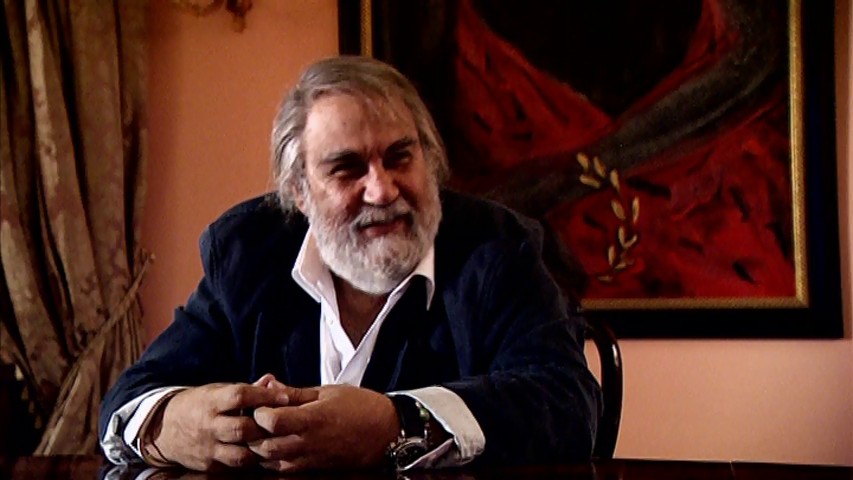 Vangelis: I don’t dislike working on films, although it is a very very painful situation. And it is painful because of all the pressures. Cause everybody is under pressure. And the film is a very very difficult business, because first of all it costs a lot of money. And many things they are a mistake, so already the people that are working for a film, they are really under great pressure. You know it is easy you know, Alexander cost to me a few kilos, my engineer had a heart-attack. Things like that is good! (laughs).
Michael Deely: Nothing was straightforward about Blade Runner, from the very beginning. We shot some early stuff, and Ridley wasn’t happy about it, which automatically put us virtually over budget from the start. But the worst thing that happened, was, the day after we finished shooting, both Ridley and I received a note from, a letter from the lawyers of the partial financiers, Perenchio and Yorkin, dismissing us from the picture, on the grounds of, contractually if we were 10 percent over budget, they could, and we were 10 percent over budget, which is not at all uncommon. So they loathed us by then, they just said: You’re fired!
Ridley Scott: You can’t sit there thinking, I wonder if they like it, you can’t, when you finish a mix, so every phase that you finish, you’re looking at the editing process, then you’re gonna enter the scoring process, then you gonna enter the mixing process, then you’re gonna look at the finished, and the danger as you test it, there is always some jerk who says ‘Do you know, I think...’ ‘Shut the fuck up!’ You know (laughs).
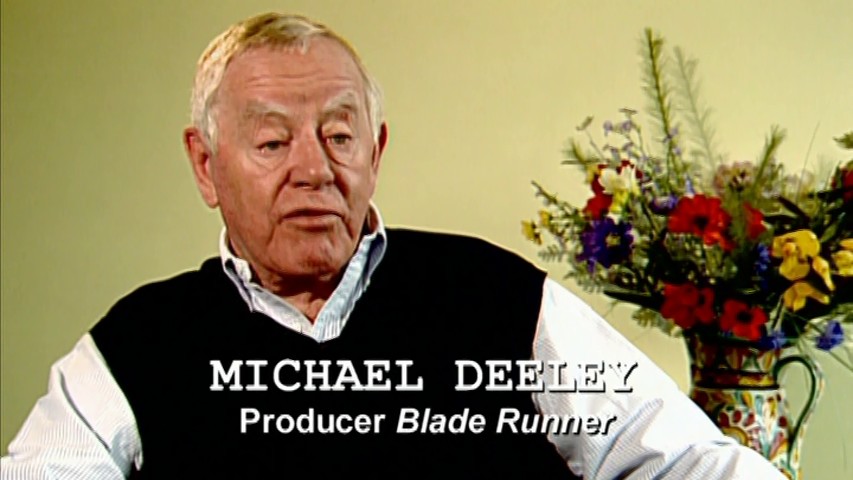 Michael Deely: There was debate, because the picture didn’t have a good ending. And at one point we actually borrowed a piece of film from Stanley Kubrick, from The Shining. Stuck that on the end. Which he generously allowed us to do. It was a happy ending. Everyone wants a happy ending at this point. After that, the notes which we received were all about how dreadful the film was in many different ways. It wasn’t just dreadful, it was dreadful for several good reasons in their minds. First of most, where is the Vangelis-music? Well, obviously it wasn’t there yet, we don’t put it on rough cut. Opening is too shocking. Appalling remarks, one great one, the seventh note in fact was this movie gets worse every screening. That’s pretty good!
Vangelis: I’m not sitting down and say, well, OK, what I’m going to do with this? And try to be, to underline something, but it’s the first, of course I can underline it. We all do. I do it as well if I want. But I try not to, and I try to be as much as instinctive as possible. I mean, when I see something, immediately to react, and my first reaction I put it down on tape and this is it. And maybe that’s why, maybe I say, I don’t know, maybe that’s why you have this reaction.
Michael Deely: We were doing a 36-hour day, because we had to finish. Roy Batty suddenly came to me and said ‘I want to talk to Ridley about some lines’. I said, can’t do it now, we are rushing. That’s what he wanted, for Ridley to come down off his camera platform, and start discussing lines. But anyway, this guy wants to do it, and Ridley said thank you, yes, OK do it. So that was never written in the script, or ever written, only said those lines by Roy Batty. Pretty good!
Ridley Scott: At its highest level, the music is the final and the last dialogue that goes into the movie, cause I gradually realised that music is almost dialogue. It’s telling you something, and it is telling you emotionally, I don’t mean sentimentally, emotionally it is telling you something. It’s telling you whether to be frightened, whether to be afraid, or whether to be uhm... you know. It pushes buttons. It pushes emotional buttons. Now, I know composers don’t like to hear that, but it’s true. Someone said to me once: God you’re so manipulative in the films you make. I said, isn’t that what theatre is, that is what we do. Vangelis is maybe the most successful and innovative of these guys, that is why he is the best.
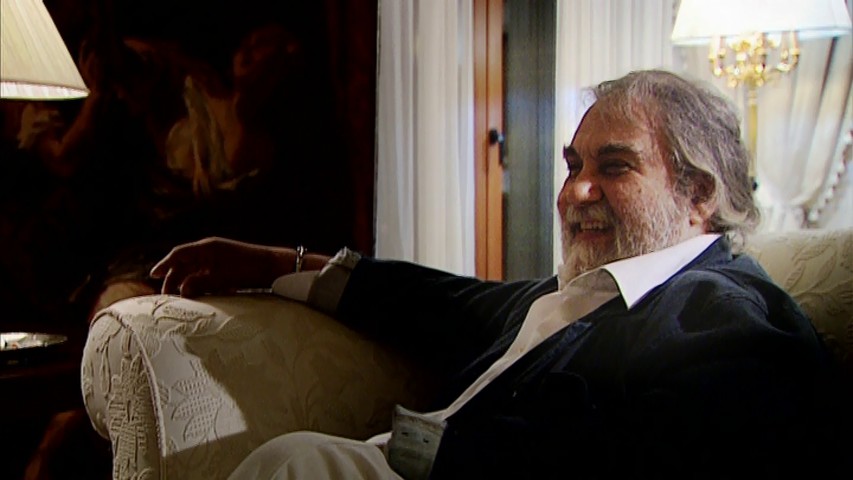 13. Family & childhood; musical beginnings. Hugh Hudson, Peter Gelb, David Puttnam and Julian Rachlin
Vangelis: My parents left Athens during the war, because during the 2nd World War the people in Athens died from hunger. It was a terrible situation. And many people, I mean in order to survive, left Athens and they went to villages, to places where they could find a little food. And my grandfather used to own a lot of land, he had a lot of breadfruits, oil, olives, things that could survive, I mean that’s why my family survived. Although I didn’t understand at the time. Later I understood that they had been through hell, there has been a war and a civil war. But they made it such a way that nothing of those things touch anybody of us, my brother and myself. Yeah.
I was born in a village actually, near Volos. Volos it’s in the middle of Greece, about maybe, almost 200 miles from Athens, north, by the sea. Marvellous at the time, beautiful town. A lot of gardens and flowers. Because this place is at Pelion, near Pelion, Pelion is this mountain, the mythological mountain of the Centaurs. And this mountain is known because of the vegetation. It’s a lot of green, and this is incredible, because this area, I mean you can feel the seasons, you can feel the winter, a very heavy winter, with snow on the top. You can feel the autumn, with its extraordinary colors, the pastel colors. You can feel the summer ofcourse, and the spring, which is... I mean, you can faint from the aroma, all the flowers, extraordinary. This is the house I grew up. That was my first piano, my first friend, real friend. The funny thing about that is that I remember myself sitting at the piano, but I never remember how I started. Which means I had to start very very early. Most of the times people say ‘Oh yes, we had the piano at the age of, I don’t know, 5 or 6 or 10, you know, I took some lessons, and I started to play the piano’. But I don’t remember that, I remember sitting there.
Hugh Hudson: He lives everything to the full, I think, when he smokes cigars, wonderful cigars he smokes, and he loves them. And he eats in the most totally enjoyable way. He enjoys everything. And I am sure he has had enormous depressions, I have been through a big depression with him. Loyalty is vital for him. Yes loyalty is totally vital for Vangelis. Absolutely.
Vangelis: My mother used to play the piano and sing. Classical stuff, lieder. And she used to compose herself. And, because I had a good ear, I just remember those things and play with her, and even with a little accordion sometimes, because I couldn’t carry the piano outside in the garden, and then I had this little accordion my uncle bought for me. And I used to accompany my mother when she used to sing some nice, beautiful songs. Some ballads and things like that. I remember those moments.
I never used to go out and play with my friends of the same age, but spent my time with the piano, that was a different conversation. I still have this piano, because I had in front of me the sound, although it was not the only sound, because I used to produce sounds with all the objects of the house, especially the kitchen stuff. Great. I mean, I used the glasses and water and changed the pitch and all the pans of my mother, and I would go all the time in there. I think that, you know, my mother, she was quite, quite good, I mean, she never really been angry or something, because I used to break something.
I used to open the piano and do things like adding things between the strings and things like that, metal things, or other things, in order to create sounds and to obtain things that a normal piano doesn’t do. By creating the sounds which actually for my mother it was quite extraordinary and quite strange, for me it was a wonder, because I used to obtain incredible things out of the piano. And then, another thing that I used to do, I used to go under the piano, especially when my mother used to play, and... I was so impressed to hear the sound coming from above and hit my head, bup, bup, bup, like that, and under the piano, it was my little, little house, with some toys. And that was really a very safe place to be.
When you are successful I think it’s very important for your mother and for yourself. And when we had the first success, big success in France, at exactly at that time, I’d been waiting for her to visit me in Cannes, in France, South of France, and, suddenly she died. And that was, you know, a terrible thing, because I know that parents die somehow, sometime, but I think she died the wrong time, wrong moment. It was very, it was a really terrible blow for me.
 Peter Gelb: I’m used to dealing with artists with fragile personalities. I mean, I think that he is a very warm, expansive individual, one of the most generous human beings I’ve ever met. But, you know, one thing I’ve learned with great artists, Vangelis included, is that you should never take for granted that one aspect of their personality automatically extends to other parts of it and, certainly, he explained to me, in the course of my working with him, that he had been burned or betrayed a few times by people whom he had trusted, and that obviously had, that he wore the scars of those betrayals. And, so it was understandable, but somewhat contradictary, as on the one hand, he is full of warmth and friendship, and the other hand, he is deeply suspicious. It took me a while to earn his trust, you know, he made me feel that I wanted to earn his trust, and I would use, you know, and I didn’t want to let him down, either.
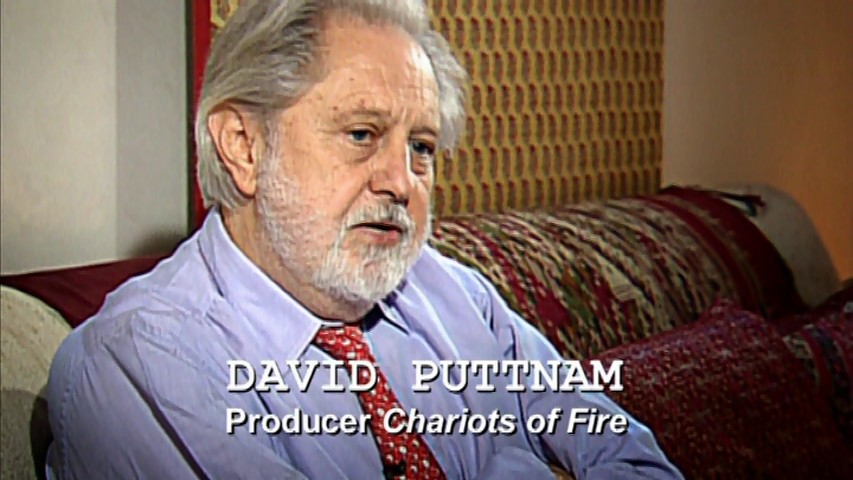
David Puttnam: I think he’s very protective of the relationships he forges. I get the sense that he’s someone been hurt a great number of times. And yeah, he lives in a cocoon, and he was just very careful about who was allowed into that cocoon.
Vangelis: For years people they’ve been saying that I don’t like to fly, for example, you know, it’s been in every paper. And I have so many bits of films, myself, in a plane, in a cockpit, you know, laughing and, you know, and joking and all that, so... I mean, if you want to know anything, you just ask me, you don’t believe what people say, right?
Julian Rachlin: He’s a person who loves time, at the same time, who loves to take a lot of time, who doesn’t play the stressful game of some, of our world, in a way. And on the other hand, when you visit his home, the time stops.
14. The Prayer. Montserrat & Monsita Caballé
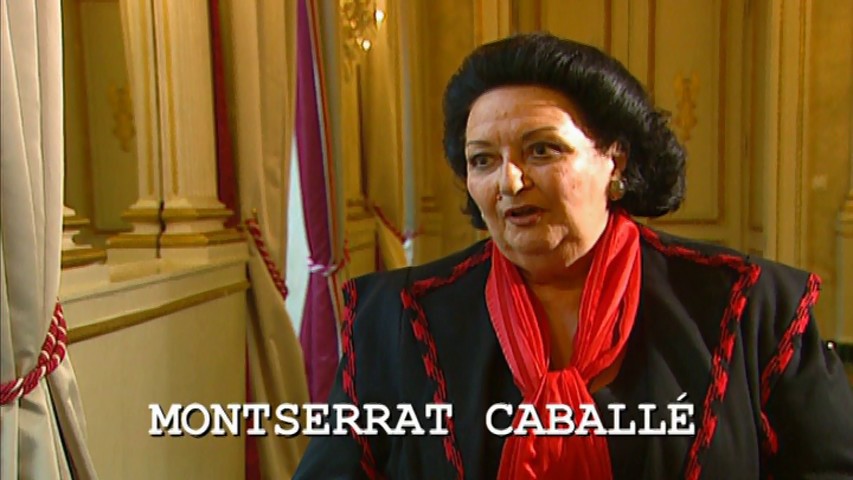 Montserrat Caballé: I was feeling very inspired by his way to open windows in the heaven, so we wanted to do, first thing at all, sort of, I cannot say an audition, but to meet and to find out how he composes his work and how maybe I can fit in, inside his music, I mean. And, so I went there with my daughter and, first of all, a great admiration, but a great emotion to know how he is, how he looks, if he looks like the pictures, or whatever. And to me the first impression, to tell you the truth, it was like, you know Moses? Excuse me, but, no I’m not joking. His white beard and his way, very ‘imposant’ and very kind, very, very kind.
We were singing for a while and then, suddenly, he says: ‘Your daughter sings too?’. I say: ‘No she just begin to learn, a little’. And I thought ‘oh my God, this will be a catastrophe’. Because I thought Montserrat was not prepared for these things. She was singing for the first time one aria for her mother, no? And everyone was happy, but she has never done anything. And she was beginning ..., so we were doing that for 22 minutes. 22 minutes is a long time, but, for some reason, I don’t realise it was that long, and my daughter, for the first time, for the first time in her life, was feeling something, and it was like we were doing a duet of feeling.
But I needed something for the next record, something very special, so, it was a moment of great emotion, because the wall of Berlin fell down, and then he has done ‘March With Me’ for this occasion, and once I sang that in Berlin with all the Prime Ministers around. Then he was to win the Champs de l’Esprit, that was for the rise of peace in Paris, and we have sung it, there, in the UNESCO.
He has done wonders, all over his life, ready to help people, ready to do things for people, because the first time, for example, that the bells of Kremlin sound in that big place after 72 years these were forbidden, it was with his music, because it was a concert, a benefit concert for, to help children, handicapped children, and the emotion was all over the big place. And, you know, to sing that and hear his music together with the bells, that was incredible. The Pope was crying, and, of course, we have to thank him, that he has done this for the children, handicapped children.
15. Parental encouragement. Chariots Of Fire. Hugh Hudson and David Puttnam
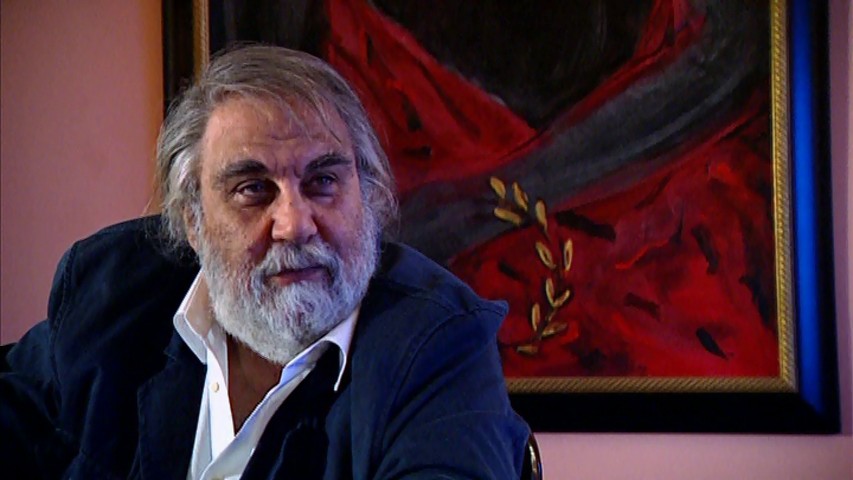 Vangelis: My mother, she was a mezzo-soprano. She never ofcourse became a professional, because at the time it was not seen very well to be an artist. You know, society rules, right? But my parents never never stopped me by doing things that I would like to do. Partly because I started so early, and I never gave them a chance for something else. So that was obvious, when they see a child, you know, start to play its own compositions, at the age of 3 to 4, I can’t remember, it was very difficult to say to this child ‘don’t do that’. My father was not an artist, but my father loved music and we used to go to concerts and things like that together.
Hugh Hudson: Vangelis’ father was an Olympic athlete. He had an immediate understanding and nostalgia, or love for athletics. His way of working was really that he just used to see the film, and perform to the film, so you got a completely instinctive emotionally gut reaction.
David Puttnam: I knew it was a defining thing of my career, that if this film didn’t work, I probably shouldn’t be in the business. But I knew it was good. But on the other hand I didn’t have any kind of absolute validation, for example I screened it one evening to a large group of people from the Sunday Times. And the screening just went badly, I don’t know what was wrong, the same movie that you saw, just went badly and they walked out and they hated the film. And I just sat there on my own in the screening room, just devastated. You know, if these people, some very nice people at the Sunday Times didn’t like it, who was going to like it?
This is a film that was made despite every single obstacle thrown up in its way, including being turned down by the BBC. Being turned down by 20th Century Fox. And we ran it for the then-head of distribution, who came to see the film, halfway through the film said he needed just to run of the loo and never came back, we never saw him again. But greatest piece of luck was the film was run for one of the sports heads of one of the networks, and offered to him as a made-for-TV sports movie. And he ran it one, quite early one morning, I remember vividly, and turned it down flat. He wouldn’t buy at any price. So we were saved from going to television because the film wasn’t regarded as good enough.
Vangelis: “My father lived through the Paris years and through the London years, until the Chariots Of Fire, and that he died, you know, just a little bit before I got the Oscar, it would have been great for my father of course, you know, everything has been calculated like this, there’s nothing I can do about it.
Hugh Hudson, when he asked me to do the music of the movie, to score the movie, he said ‘you do the rest, it is yours anyway, we keep this theme for the beginning’. And I said ‘But maybe I can do something else’. He said to me ‘No you can’t beat this one, this is really great!’.
David Puttnam: “But the very last minute, I mean I can’t remember how late it in the day it was, it was pretty late in the day, I got a call, my wife and I were in a restaurant in London, got a call from him saying ‘Where are you? Stay right there, don’t move (we were not going to move anyway, but), don’t move I will come and see you.’ 15 minutes later he drove up in his Rolls-Royce, came into the restaurant, got us to come out, sat in the back of the Roller, and he said ‘I want you to hear something’. And he put the theme on, and we sat there, and I think we both were knocked out, it was very very impressive, a big bass in the back of the car you know. And I looked at him, and I realised he was crying. He said ‘You know my dad was an Olympian (which I hadn’t known, he never mentioned it before), it was in the 1936 Olympics. It’s a requiem for him’. He said ‘This is the key, I realised actually I am writing it for my dad!’.
Hugh Hudson: On the night of the Oscars, of course, Vangelis wasn’t there. And I didn’t think he was really interested in it, you know. Now it means a lot to him he won an Oscar, quite good, I suppose, to win an Oscar for music. And also he changed film music, changed the nature of film music and then onwards there. It was all done by one person. And he wasn’t there, and he had to be rung up. I don’t know who rang him up, myself or Puttnam, I don’t know. But he was asleep.
16. ‘Music is not a joke’
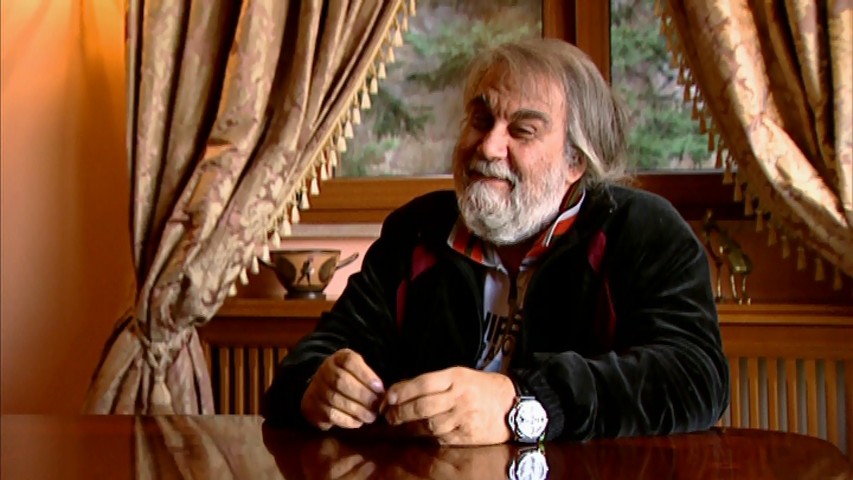 Vangelis: Music is not a joke, it’s a very serious thing. Serious thing doesn’t mean serious in a way, you know, serious. You can laugh, I mean, you can, but you have to be always there, you have to be ready. You have to, I mean, I spend hours, and hours and hours with all this system, my system, all that I create around. It needs a lot of practice. I play hours. These fingers, they’ve done, you know, miles and miles every day. And it’s not only that, it’s the connection between my brain, my fingers, my all body. It’s a... I work like an athlete.
I know many people they say that when they are with other people they are more lonely than when they’re alone. When you’re with music you’re not alone. I mean, I’ve never been alone with music. But loneliness can come for other things. Society can create a lot of loneliness. More and more. And we have to be prepared for that how to deal, to have little psychological devices, you know, to prevent, or to accept the loneliness.
What else? Tell me.