
 Introduction
“Chariots Of Fire” is the title of a British historical drama film directed by Hugh Hudson, produced by David Puttnam and scored by Vangelis. The title is often associated with its iconic opening scene, showing a group of 1920s athletes running on a beach, filmed in slow-motion and set to Vangelis’ epic main titles. The music was released on an album in March 1981, and won an Academy Award for “Best Original Score” in 1982.
The music of “Chariots Of Fire” was a huge commercial succes, both the album as well as the 7” single that was released with the film’s opening title music (named “Titles” on the album but often simply referred to as “Chariots Of Fire”). Both the album and single reached the no.1 position in the US charts and sold millions of copies worldwide, a turning point for Vangelis who saw his music exposed to a global audience, resulting in unprecedented attention and recognition for his music.
The success was unexpected and received with mixed feelings. Vangelis: “People will buy this piece of plastic by Vangelis -this product- and they will expect the next one to be similar. I do not like to be a product. I do not like to do the same thing twice. Everything I do is spontaneous. Everything I do is improvisation. I do not like to be controlled, limited, have expectations made upon me. Music is far more important than entertainment. Music can be very dangerous. Music is nature”.
Vangelis was not present at the Academy Award ceremony in Hollywood to receive the Oscar. Despite pressure from his record company he refused to travel to the US as he was tied up in his commission for "Blade Runner" at the time. Also Vangelis was not keen of flying, so Polydor offered him a luxurious stateroom on the Queen Elisabeth 2 ocean liner, which Vangelis declined: “I don’t like to be pushed, and especially for that. I hate the idea of competition”. When the award was won in Los Angeles it was 4 a.m. in London, and Vangelis was asleep when he received a call with the news: "I'd been out late celebrating my birthday".
On the album Vangelis dedicated the music to his father, Ulysses Papathanassiou, who had passed away before the film’s release. Vangelis’ father used to be a sprinter himself and represented Greece at the 1936 Olympic Games. The famous Chariots Of Fire-theme is in fact a tribute that Vangelis wrote for his father, and due to its popular use during several Olympic Games and other sporting events, has grown into a global anthem of athletics.
The music on the album is newly recorded and re-arranged compared to the music heard in the film, leaving out several cues from the film. The final track ‘Chariots Of Fire’ is a collage of music from the film and music inspired by the film, re-arranged into a long symphonic suite “which gave me room to really develop the music and set up a dialogue among the different themes”. The only track on the album not composed by Vangelis is ‘Jerusalem’, a composition by Hubert Parry from 1916 set to a poem by William Blake, from which the line ‘bring me my chariot of fire’ is the inspiration for the film’s title.
In a videoclip to promote ‘Chariots Of Fire’ Vangelis can be seen playing the piano, keyboards and percussion in Nemo Studios, mixed with images from the film. The album received re-releases in 2000 and 2006 which were remastered by Vangelis. These remasters are the recommended version to find if in need of a copy of the album.
 Tracklist and credits
- Titles (3:25)
- Five Circles (5:15)
- Abraham’s Theme (3:14)
- Eric’s Theme (4:04)
- 100 Metres (2:00)
- Jerusalem* (2:40)
- Chariots Of Fire (20:34)
* Composed by Hubert Parry, arranged by Harry Rabinowitz, directed by John McCarthy and performed by The Ambrosian Singers.
- Composed, arranged, produced and performed by Vangelis.
- Engineered by Raphael Preston, John Walker and Raine Shine.
- Sleeve design and art direction by Alwyn Clayden.
Discography
 LP
LP
- 1981 Polydor, released worldwide.
- 1981 Polydor POLS 1026 UK (Special edition with alternate cover to mark the premiere screening of the film at the Odeon Leicester Square on 30 March 1981)
- 1982 Polydor LPR 16417 Mexico (alternate cover), re-issued 1987.
- 1988 Polydor 832 112-1 Spain (alternate cover) Cine & Music
CD
- 1983 Polydor 800 020-2 Europe
- 1985 Polydor P33P 50013 Japan
- 1987 Polydor P33P 20132 Japan
- 1987 Polydor 800 020-2 Brazil
- 1990 Polydor 847 714-2 Spain
- 1995 Mobile Fidelity Sound Lab UDCD 622 (24kt Gold Plated remastered edition)
- 2000 Polydor 549 095-2 UK, Europe, Australasia and Mexico (Remastered)
- 2002 Universal STARCD 6706 South Africa
- 2002 20th Century Fox Home Entertainment F1-OGB 01118CDVD & Polydor 549 095-2 UK (DVD+ CD boxset) Movies & Music series.
- 2005 Polydor UICY-9879 Japan
- 2006 Universal Music Catalogue 984 139-8 Europe, Canada, Australia (25th Anniversary Edition remastered edition in digipak)
- 2008 Universal Music UICY-1404 Japan (25th Anniversary Edition remastered edition in digipak)
- 2017 Universal Music UICY-78173 Japan
- 2020 Polydor UICY-79110 Japan
- 2024 Universal Music UICY-80427 Japan (Limited remastered edition)
 7” single
- 1981 Polydor, released worldwide. Picture sleeve varies per country.
Recording studio
The music for Chariots Of Fire was recorded at Vangelis’ own Nemo Studios in London.
Links
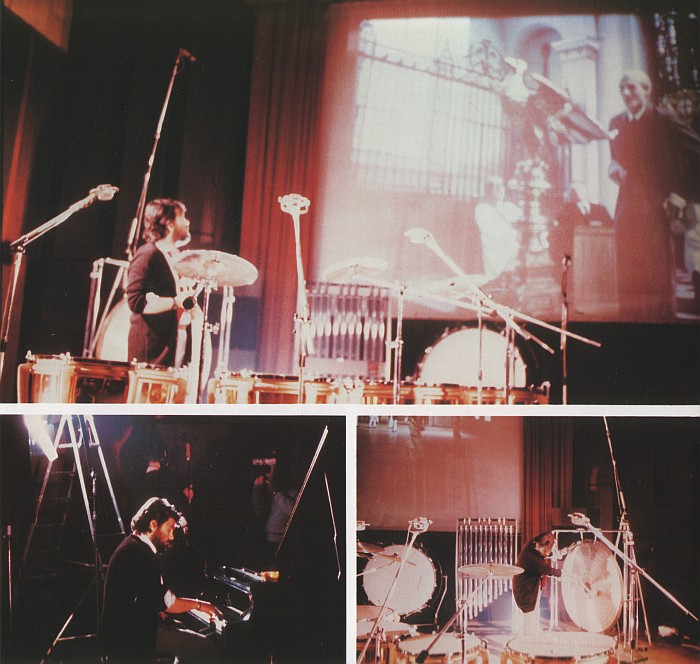
Moments during the recording of "Chariots Of Fire"