
 Introduction
In the summer of 2012 while Vangelis was staying in London he received a video call from space. On the other end was Dutch astronaut André Kuipers, calling from the International Space Station (ISS) during his second space expedition. As a great admirer of Vangelis’ music, André discussed his mission and showed Vangelis the Earth from space. In return Vangelis played on his piano for André.
Back on Earth André and Vangelis became friends, and during a meeting with European Space Agency (ESA) representatives the idea developed for Vangelis to compose music inspired by the ESA Rosetta mission. Rosetta was a space probe built by ESA that launched in 2004. Together with Philae, its lander module, Rosetta set out to explore comet 67P/Churyumov–Gerasimenko, which it reached on the 6th of August 2014. On the 12th of November 2014 Philae was the first space probe ever to land on a comet, and to celebrate this extraordinary achievement ESA released three mission videos with new music by Vangelis: ‘Arrival’, ‘Philae’s Journey’, and ‘Rosetta’s Waltz’.
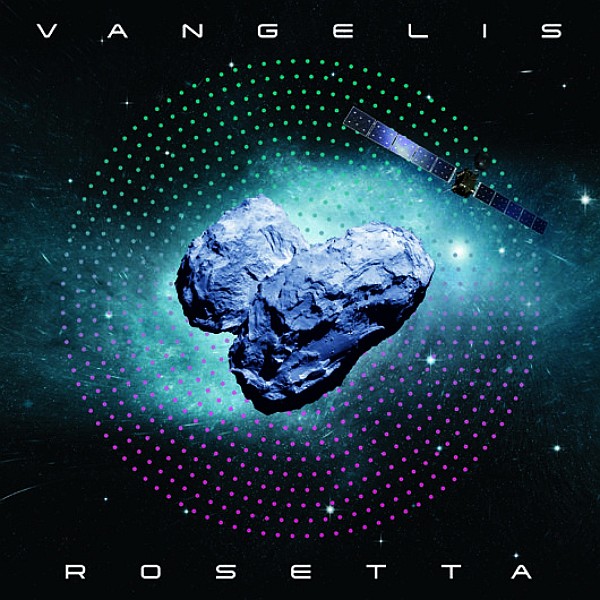
The music in the videos was a prelude to the album “Rosetta”, released by Decca Records on CD and LP on the 23rd of September 2016, one week before Rosetta ended its mission by landing on the comet. The album is a musical journey following the Rosetta space probe until its very end, through a collection of 13 cosmic tracks, where Vangelis returns to his signature electronic ambient and melodic style after a period of more orchestral oriented music. Several tracks on the album later re-appeared on other projects, such as ‘Sunlight’ which is similar to ‘Hera / Juno Queen Of The Gods’ on Vangelis’ final album “Juno To Jupiter” (2021), and ‘Perihelion’ which became part of the score for the documentary "We Are Stardust" (2022).
To promote the album Decca Records released no less than 5 teaser videos and launched the dedicated website vangelisrosetta.com (no longer online). A 16-minute promotional video known as the Rosetta EPK (Electronic Press Kit) is interesting for its interviews with ESA astronauts Jean-François Clervoy, André Kuipers, as well as a short interview with Vangelis and images of him playing in his Parisian home studio.
In the album liner notes Vangelis is quoted saying: ‘I dedicate this work to everyone who made this mission possible. In particular the ‘Rosetta Waltz’ is the expression of my appreciation to ESA’s Rosetta mission team’.
The Rosetta album received a Grammy Award nomination for Best New Age Album of 2016, but did not win the award.
 Tracklist and credits
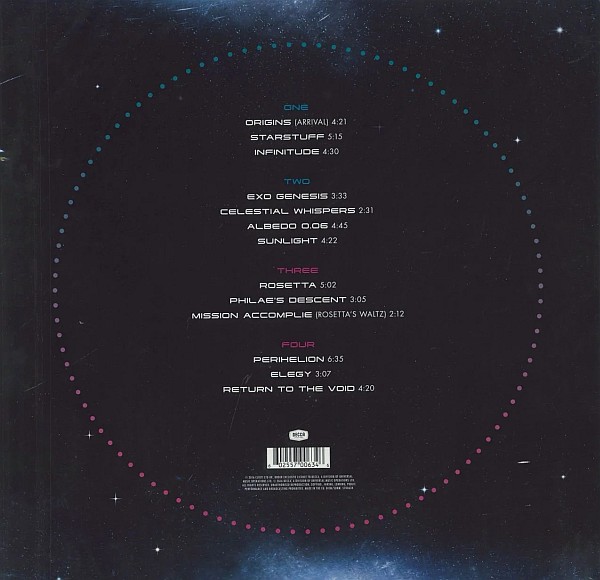
- Origins (Arrival) (4:21)
- Starstuff (5:15)
- Infinitude (4:30)
- Exo Genesis (3:33)
- Celestial Whispers (2:31)
- Albedo 0.06 (4:45)
- Sunlight (4:22)
- Rosetta (5:02)
- Philae's Descent (3:05)
- Mission Accomplie (Rosetta's Waltz) (2:12)
- Perihelion (6:35)
- Elegy (3:07)
- Return To The Void (4:20)
- Composed, arranged, produced and performed by Vangelis.
- Engineered by Philippe Colonna.
 Discography
CD
- 2016 Decca 5700631 UK, Europe and Argentina (gatefold cardsleeve)
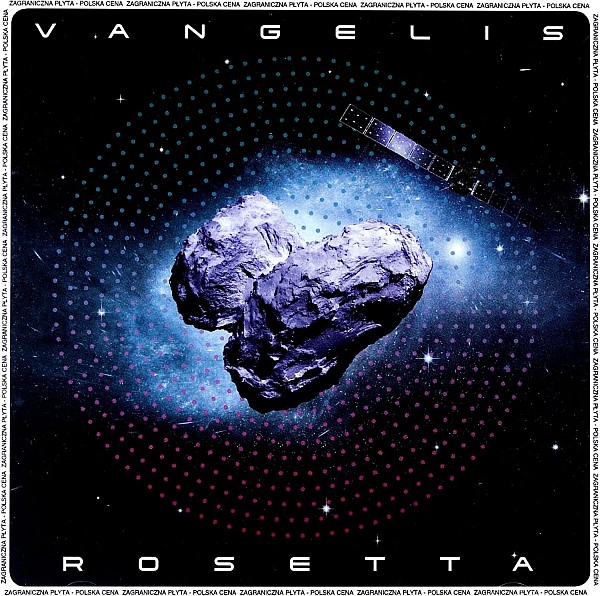
- 2016 Decca 5712598 (86) Poland
- 2017 Decca 060255700631 Brazil
- 2016 Decca UK (promotional CDr with insert)
- 2016 Decca 5700631 France (promotional CDr with insert)
LP
- 2016 Decca 5700634 Europe and US.
Recording studio
The album does not specify where the music of Rosetta was recorded, but the EPK video for the album shows images of Vangelis playing in his Parisian home studio.
Links
- Elsew.com
- Vangelislyrics.com
- Discogs.com
- Wikipedia.org
- ESA Rosetta Mission: ‘Arrival’, ‘Philae's Journey’ and ‘Rosetta's Waltz’
- Rosetta album teasers: 'Mission Accomplie (Rosetta’s Waltz)', 'Infinitude', 'Origins (Arrival)', 'Rosetta' and 'Perihelion'.
- Rosetta EPK
- Rosetta mission timeline
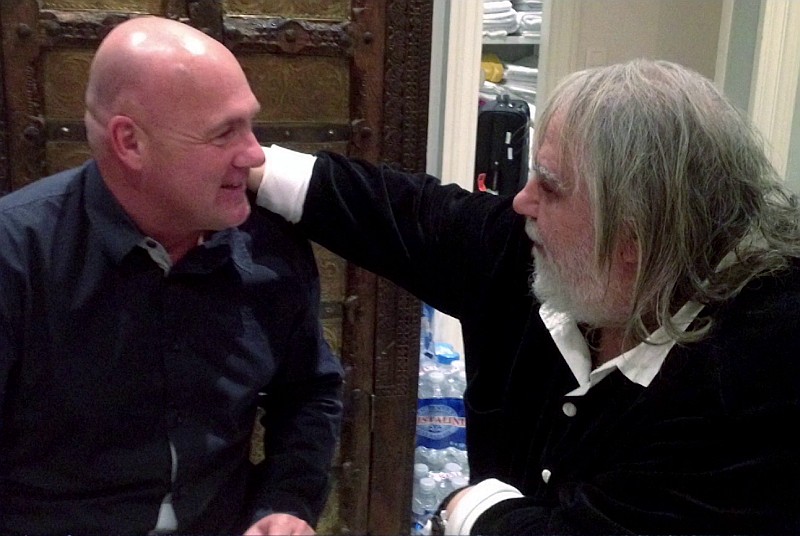 André Kuipers and Vangelis